Roof Restoration guide
When Is the Best Time of Year to Book a Roof Restoration in Brisbane?
The Short Answer: Aim for Late Autumn or Early Winter
If you want the most predictable booking windows, the best weather conditions for the work itself, and the best chance of tradie availability, late April through to the end of July is your sweet spot in Brisbane. That said, the "best" time depends on your specific roof, your budget, and what's happening to the building right now. Read on and you can make a genuinely informed call.
Why Brisbane's Climate Makes Timing Matter More Than You'd Think
Brisbane sits in a subtropical zone, and that shapes everything about roof restoration scheduling. The wet season runs roughly November through March. Afternoon storms can roll in fast, particularly in bayside suburbs like Wynnum, Manly and Lota where onshore south-easterlies push moisture-laden air inland through the afternoon.
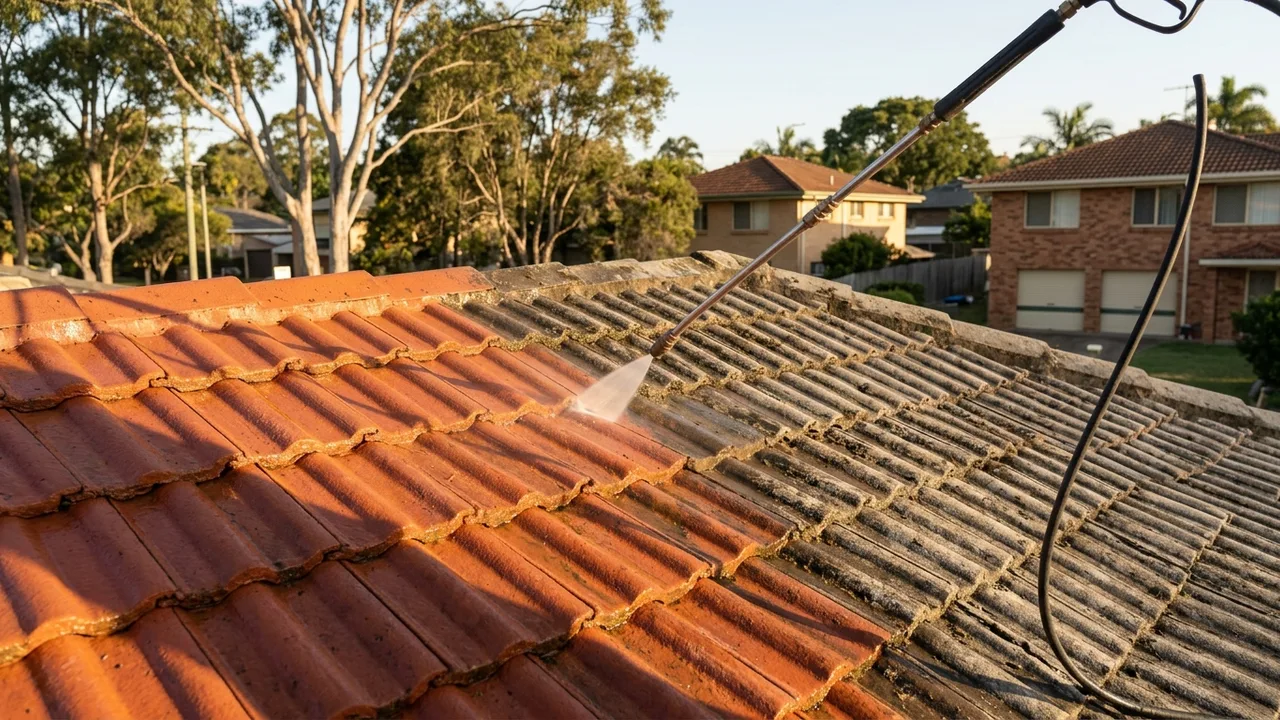
Roof restoration involves several steps that need dry conditions: pressure cleaning, ridge cap re-bedding, repointing compound curing, and the application of a protective coating or membrane. If rain hits within 24 to 48 hours of a fresh coating going down, adhesion is compromised. A reputable tradesperson will not coat a roof with rain in the forecast. That means wet season jobs get delayed, sometimes repeatedly, which drags out the project and frustrates everyone.
Extreme heat is the other variable. Tiles above 50°C can cause some coatings to skin over too quickly, trapping solvents beneath the surface. On a dark Colorbond or terracotta roof on the north-facing side of a Wynnum or Hemmant home, that's a real-world problem on a January afternoon, not a theoretical one.
The Case for Late Autumn and Winter (April to July)
This window ticks the most boxes for most Brisbane homeowners.
Rainfall drops sharply. Bureau of Meteorology data consistently shows Brisbane's wettest months are January through March, with June and July being among the driest. That means fewer weather delays once a job starts.
Temperatures are mild. Mornings in the 15-20°C range and daytime highs around 22-26°C sit right inside the ideal curing window for most water-based acrylic roof coatings. The sealant has time to bond properly before the next day's sun hits it.
Tradie availability tends to improve. The summer storm season drives emergency repair calls. Once that eases off in April, lead times from local operators often shorten. You're also not competing with every other homeowner who discovered a leak during the last storm.
You're positioned before spring. Finishing a restoration by July means your roof heads into the warmer, wetter months protected and freshly coated. That's the logical sequence.
The trade-off is that mid-year can still see cold snaps in the mornings. Repointing compounds have minimum application temperatures (typically around 10°C, though this varies by product), so very early starts on a July morning might need to be delayed an hour or two. Not a dealbreaker, but worth knowing.
Spring (August to October): Still Decent, With a Caveat
Spring is a reasonable fallback if you missed the winter window. Conditions are generally dry in August and September, and temperatures are pleasant. The catch is that October marks the unofficial start of storm season in South East Queensland. Shower frequency picks up, and the forecast becomes less reliable.
Spring also tends to be busy for roof tradies because homeowners start worrying about summer leaks. Booking lead times can stretch. If you're aiming for spring, lock in early, ideally in August rather than leaving it to October.
One local note: if you're in a suburb with established trees (jacaranda canopies are heavy around parts of Manly West and Wynnum West), late spring sees significant leaf and petal drop. Gutters can block fast. If your job includes gutter replacement or fascia repairs, doing it before or early in the jacaranda season makes practical sense.
Summer (November to March): Possible, But Complicated
Restoration work does happen over summer, and sometimes it goes smoothly. But the risks are higher and you need to go in clear-eyed.
Work can be delayed for days at a time. If a contractor is blocked by rain mid-job, your roof may sit partially cleaned and uncoated while you wait. That's not ideal for a roof that's already been stripped of its old surface.
Emergency repair work spikes after storms, so if your roof has developed an active leak, you may need to wait longer for a qualified team to get to you. Getting in well before November, even if that means booking during the drier months, is the smarter move.
If you're in Wynnum or Manly specifically, the proximity to Moreton Bay means salt-laden air is already working on your roof year-round. A cracked or porous coating left exposed through a full wet season accelerates that damage. Every summer you defer can mean more substrate work needed the following year.
The one genuine argument for summer: some contractors offer better pricing to fill quieter weeks between storms. If cost is the primary driver and you're flexible enough to reschedule when weather intervenes, it can work. Just get that flexibility documented in your quote.
What Happens Inside Your Roof Matters Too
Timing isn't purely about weather. The condition of your roof now should inform how urgently you act.
If your terracotta or concrete tiles are showing hollow or rocking ridge caps, deteriorating pointing compound, or cracked tiles with visible staining on your ceiling, don't wait for the ideal season. A partial repair, particularly ridge cap re-bedding and tile replacements, can be done in a day or two and protects you until a full restoration in better conditions is viable.
Flashing repairs and gutter replacements are also less weather-sensitive than a full coating job. If your gutters are sagging or your fascia boards are rotting, that work can often proceed in conditions that aren't suitable for a full coating application.
In short, separate the urgent structural work from the cosmetic and protective coating work. A good operator will tell you the same thing.
Pulling It Together: A Practical Recommendation
If you're planning ahead, book a late April to July restoration. Contact a provider in March or early April to secure your spot, because the better crews fill up. That timing gives you dry conditions, comfortable temperatures, and a protected roof heading into the wet season.
If it's already mid-year and you've been putting this off, late August to mid-September is still a reasonable window. Avoid leaving it past October if your roof genuinely needs a full restoration.
If you're seeing ceiling stains, cracked tiles, or sagging gutters right now, don't wait for the perfect season. Get someone on the roof for an assessment and address the structural items immediately.
A full roof restoration in Brisbane typically runs $3,000 to $12,000 depending on the size of the roof, the extent of repairs, and the coating system used. Spreading the cost across the right season is smart. Spreading the damage across another wet season because the timing wasn't perfect is expensive.
If you'd like to talk through what your Wynnum or bayside home actually needs before you book anything, we connect local homeowners with vetted providers who can give you an honest assessment. There's no obligation in asking.
Quick answers