Roof Restoration guide
Can You Restore Your Own Roof, or Is That a Dangerous Mistake?
Can You Restore Your Own Roof, or Is That a Dangerous Mistake?
The honest answer is: it depends on what you mean by "restore". Some tasks are genuinely manageable for a careful homeowner. Others will put you in hospital or leave your roof in worse shape than before. Knowing which is which is the whole game.
What "Roof Restoration" Actually Involves
People use this term loosely, so it helps to break it down. A full restoration typically covers several distinct jobs done in sequence:
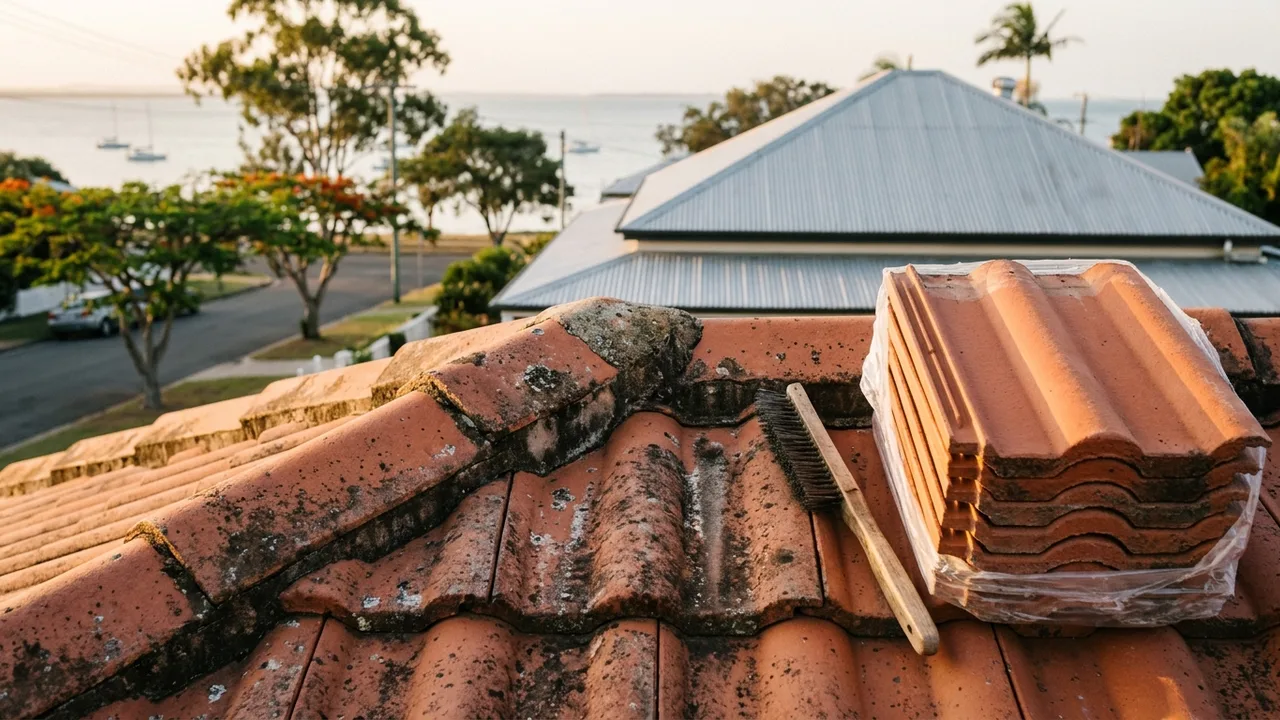
- Pressure cleaning to strip lichen, moss, and years of built-up grime
- Tile and flashing repairs to fix cracks, broken pieces, and open joints
- Ridge cap re-bedding and re-pointing to resecure the mortar and flexible compound along the roof's spine
- Protective recoating or sealing to lock moisture out and slow weathering
Each step has its own skill level, its own safety profile, and its own set of things that can go wrong. Treating "roof restoration" as a single DIY task misses that reality. You might be confident doing one of these steps and completely out of your depth on another.
The Safety Question First, Because It Matters Most
Falls from roofs kill and seriously injure people in Australia every year. That is not a statistic designed to scare you away from a ladder. It is a reason to be specific about what safe access looks like.
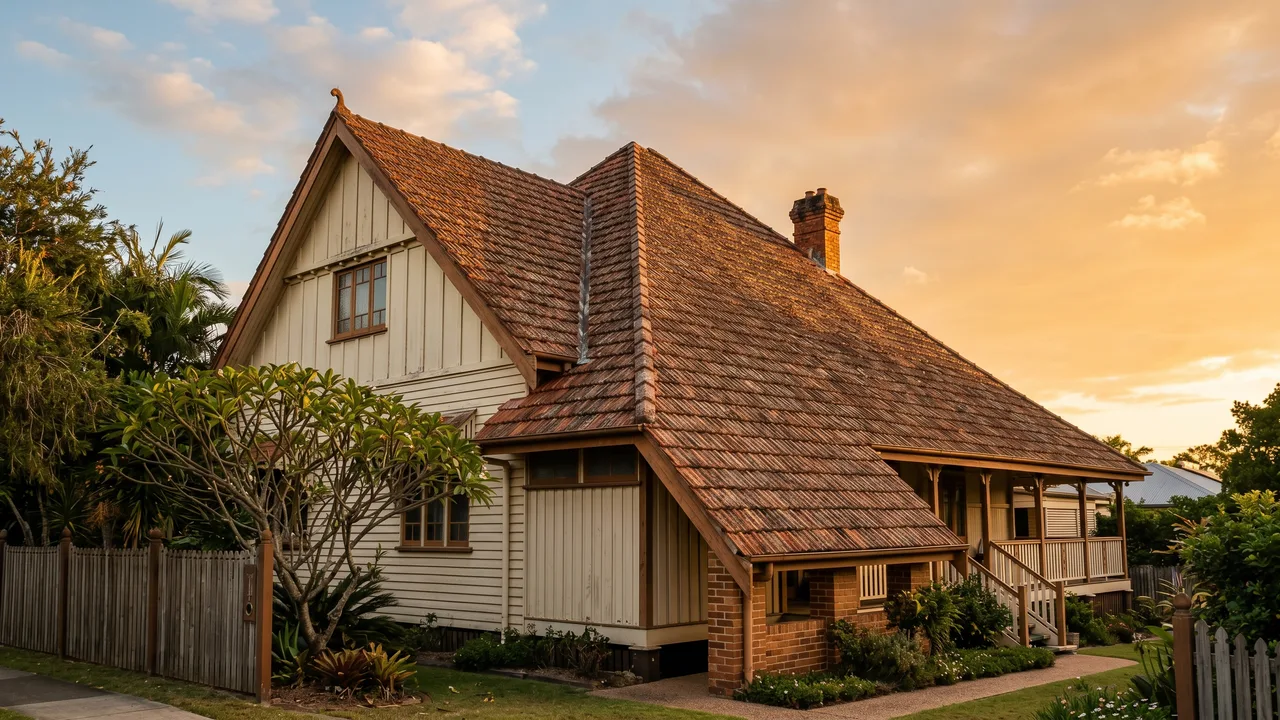
A single-storey home in Wynnum West or Hemmant, with a low-pitch metal roof and a solid edge, is a different proposition to a steep terracotta-tile roof on a two-storey Queenslander in Manly. Wet tiles are slippery even before you add a pressure washer. Older concrete tiles, common on homes built across the Bayside suburbs through the 1980s and 1990s, can be brittle underfoot. Step in the wrong spot and you go through.
Safe DIY roof work requires, at minimum:
- A rated roof ladder hooked over the ridge
- Non-slip footwear designed for roofs (not just rubber soles)
- A second person on the ground, always
- Anchor points and a harness for anything pitched above roughly 26 degrees or on a two-storey home
If you cannot confidently tick all four, the risk is not theoretical.
What a Homeowner Can Reasonably Do
Let's be fair. Some parts of roof maintenance genuinely suit a capable DIYer.
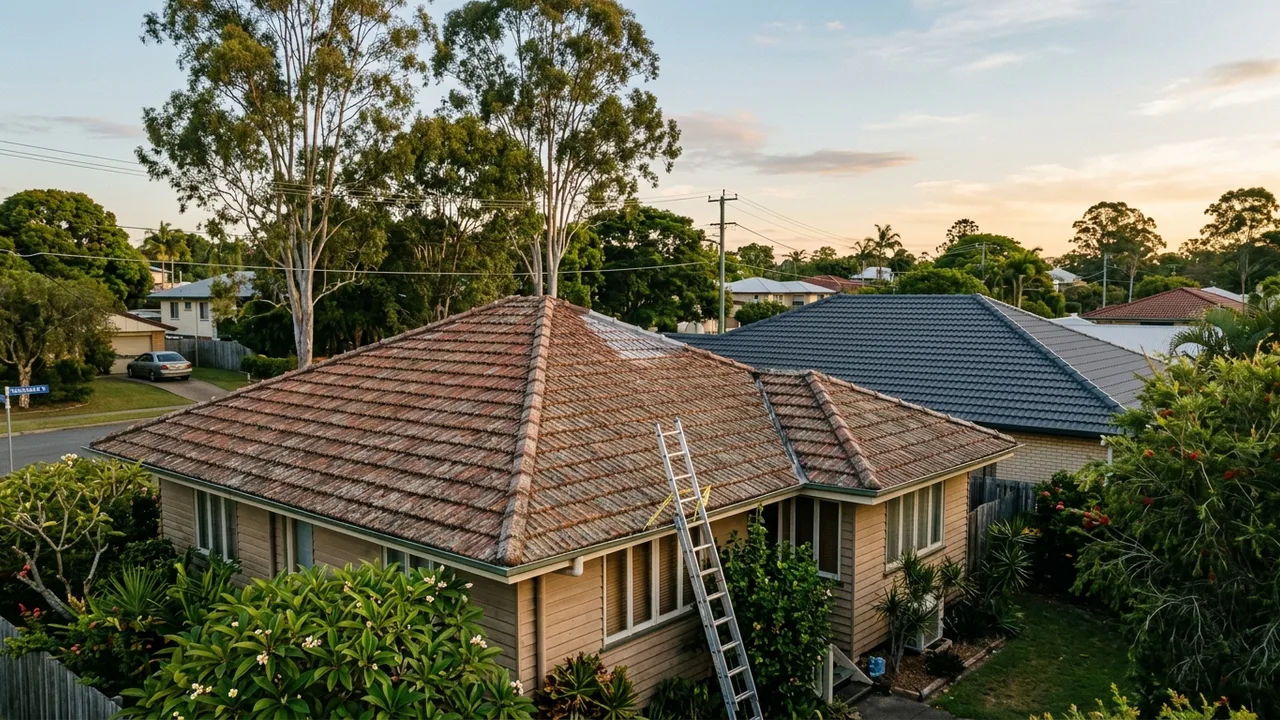
Gutter cleaning and inspection from a safely positioned ladder is one. You are not on the roof surface itself, and if you stay within your reach rather than overextending, the risk is manageable.
Visual inspection from a ladder or through binoculars from the ground tells you a lot. Cracked tiles, displaced ridge caps, rusting valleys, lifted flashings - these are visible. Knowing what you are looking at is the skill, not the climbing.
Minor moss treatment applied by spray from ground level using a low-pressure garden sprayer is also something many homeowners handle themselves. Products containing benzalkonium chloride or similar biocides are widely available. They work slowly (you are typically waiting weeks for the moss to die back), but they are low-risk.
What these three things have in common: you are either not on the roof at all, or you are managing stable footing with a single task in hand.
Where DIY Restoration Gets Expensive Fast
Here is the trade-off that catches people out. The jobs that look straightforward often have a downstream cost when they go wrong.
Re-pointing ridge caps is a good example. The old sand-and-cement mortar needs to be cut back before you apply flexible pointing compound. If you apply new compound over cracked, hollow mortar, you seal the problem in rather than fixing it. Water still tracks underneath. The new compound peels within a season. You have spent a weekend and $200 on materials, and the underlying issue is unchanged.
Roof sealing and recoating is another. The surface must be completely clean and dry before any sealant or membrane goes on. In Brisbane's humid climate, particularly through summer, getting a tile surface dry enough for a proper bond is genuinely tricky. A coating applied over damp or dirty tiles will blister, peel, and potentially trap moisture against the tile, which accelerates the deterioration you were trying to stop.
In both cases, the risk is not just wasted money on one attempt. It is that you mask the problem well enough that you stop worrying about it, and the issue quietly worsens for another few years until it is a much bigger repair.
The Wynnum and Bayside Context Worth Knowing
Homes in the Wynnum, Manly, and Lota corridor sit close enough to Moreton Bay that salt air is a real factor. Salt accelerates corrosion on metal roofing, ridging screws, and gutter brackets. It also interacts poorly with some DIY sealants that are formulated for inland conditions.
If you have a metal roof, particularly Colorbond or older corrugated iron, inspecting and treating any rust spots before applying a topcoat is not optional. A homeowner who skips this step and rolls a sealant over surface rust will see the rust continue spreading underneath within 12 to 18 months. For a bayside property, a product with rust-inhibiting primer as a separate first coat is typically worth the extra cost and step.
Terracotta and concrete tile roofs in this area also tend to carry heavier lichen loads than comparable homes further inland, simply because of the coastal humidity. Pressure washing before any repair or coating is more important here, not less. That also raises the question of safe pressure washing technique, which is genuinely a skill. Too much pressure on aged concrete tiles removes the surface layer. Too little leaves the lichen root structure intact and it regrows within months.
A Sensible Way to Think About the Decision
There is no single right answer that applies to every homeowner and every roof. A useful way to think about it is this: separate the work into what you can safely observe, what you can safely maintain, and what genuinely requires trained hands and proper equipment.
Observation is yours. Get comfortable doing a thorough visual inspection twice a year, ideally before and after storm season. Learn what healthy ridge pointing looks like versus pointing that is cracked or hollow. Know what active lichen looks like versus staining that is already dead.
Maintenance at ground level or on a stable ladder is often yours too, depending on your fitness and comfort at height.
Anything that requires you to spend meaningful time moving across a pitched roof surface, using equipment you do not regularly use, or applying materials where the bond integrity matters, is worth pricing out with a professional first. For a full restoration in Wynnum or surrounds, you are typically looking at $3,000 to $8,000 depending on roof size, pitch, condition, and material type. That range can climb higher for larger homes or more complex repairs.
That is real money, and it is completely reasonable to want to weigh it against a DIY attempt. The honest trade-off is this: the saving is real if the job goes well, and the cost of fixing a poor DIY attempt plus the original problem is also real if it does not.
If you want a proper quote to compare against, we connect Wynnum and Bayside homeowners with local troofers who work in this area regularly. No pressure, just a number to make an informed decision with.
Quick answers