Roof Restoration guide
How Long Will a Roof Restoration Last in Brisbane's Climate?
How Long Will a Roof Restoration Last in Brisbane's Climate?
A well-executed roof restoration in Brisbane typically lasts between 10 and 20 years, depending on the coating system used, the quality of the prep work, and how your roof handles the local climate. That's a wide range, and it's worth understanding what pushes a job toward the shorter end versus the longer end.
What "Roof Restoration" Actually Includes
It's worth being clear on this, because the term gets used loosely. A full roof restoration is not just a coat of paint over dirty tiles. Done properly, it covers:
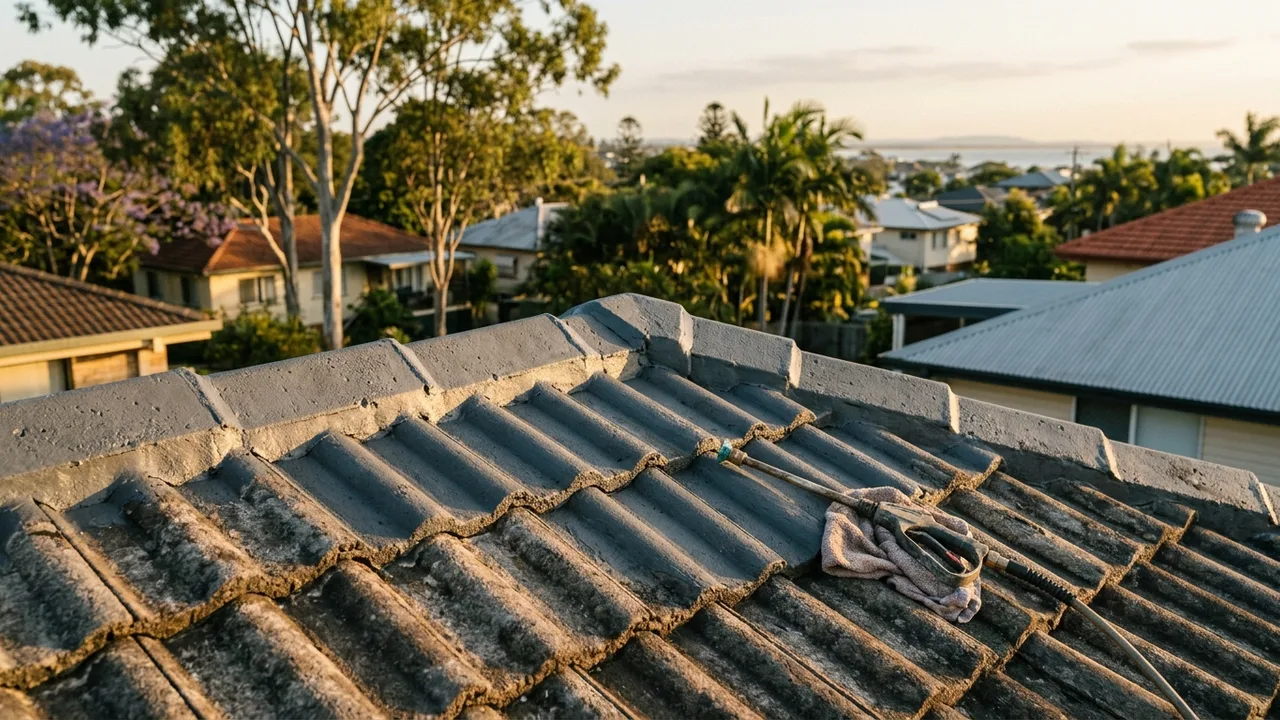
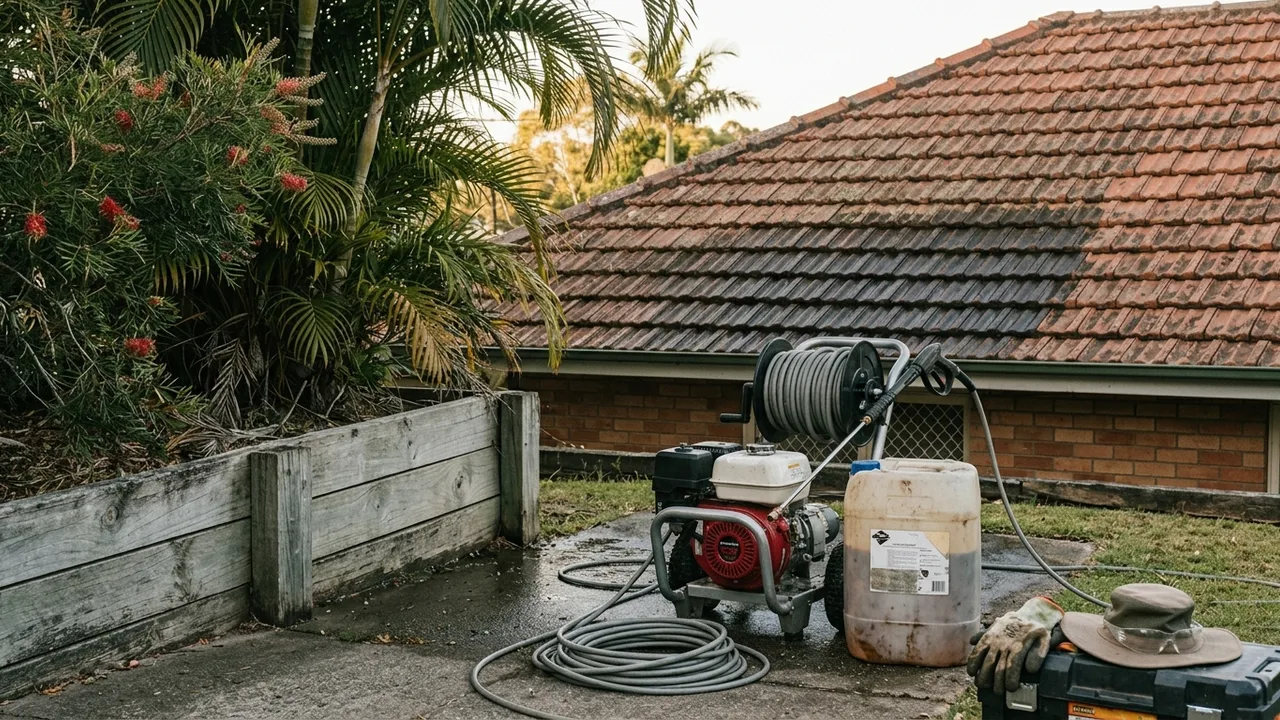
- Pressure cleaning to strip lichen, moss, grime and loose debris
- Tile and ridge cap repairs, including re-bedding and re-pointing of ridge capping where mortar has cracked or shifted
- Flashing inspection and resealing where the roof meets walls, valleys, or penetrations like skylights
- A protective coating or sealant applied to clean, prepared surfaces
Each of those steps matters. If any one is skipped or rushed, the lifespan shortens noticeably. A paint-over of dirty, cracked or poorly pointed tiles might look fine for two or three years, then start peeling or admitting water well before the decade mark.
How Brisbane's Climate Affects Longevity
Brisbane's subtropical climate is genuinely tough on roofing materials. The combination of UV intensity, heavy summer rainfall and high humidity creates conditions that degrade coatings faster than, say, Melbourne or Adelaide.
A few specifics:
UV exposure. Brisbane receives significantly higher UV levels year-round compared to southern capitals. UV breaks down polymer-based roof coatings over time, causing them to chalk, fade and eventually lose their water-repellent properties. Higher-grade coatings with UV-stabilised resins hold up longer. Cheaper acrylic sealants may start showing wear in as few as five to seven years.
Summer storms. Bayside suburbs like Wynnum, Manly and Lota sit closer to Moreton Bay and can cop stronger storm cells, gusty southerlies and salt-laden air. Salt air is harder on metal roof components (flashings, valleys, ridge caps with metal fixings) than it is on concrete or terracotta tiles themselves. If your home is within a kilometre or two of the waterfront, it's worth asking your contractor about salt-tolerant primer coats and stainless fixings where relevant.
Biological growth. Brisbane's warm, humid summers are ideal for lichen and moss. Suburbs with significant tree canopy, including parts of Wynnum West and Hemmant, tend to see faster biological regrowth after restoration. This doesn't necessarily mean the coating has failed, but moss and lichen can trap moisture against the coating surface and accelerate wear if left to build up. A soft wash or light re-treatment at around the seven to ten year mark can meaningfully extend the original restoration's life.
Thermal cycling. Tiles and metal roofs expand and heat significantly during Brisbane summers, sometimes reaching surface temperatures above 60°C. That daily heating and cooling cycle stresses the bond between coating and substrate. Flexible pointing compounds used in ridge cap re-pointing are specifically designed for this; older cement-only mortar will crack faster.
Tile vs Metal Roofs: Different Timelines
The substrate matters as much as the coating.
Concrete and terracotta tiles are common across inner bayside Brisbane, particularly in the older homes of Manly, Wynnum and surrounding streets. A properly restored tile roof, with re-bedded and re-pointed ridges, repaired cracked tiles and a quality coating, can realistically reach 15 to 20 years before the next major intervention is needed. Terracotta tends to be more durable than concrete tile, but both respond well to restoration if the substrate is still sound.
Metal roofs (Colorbond or corrugated iron) in older Wynnum and Hemmant homes are a slightly different case. If the metal itself is in good condition with no deep rust or significant corrosion, a quality primer and topcoat system can add a decade or more of life. However, if the sheet metal has thinned from rust, a coating is not a substitute for replacement. A reputable contractor will tell you that honestly before quoting.
Older fibrous cement sheet roofing, occasionally found in pre-1980s homes across these suburbs, is a separate category again and typically warrants specialist advice before any restoration work.
The Variables That Shorten (or Extend) the Result
Here's a practical breakdown of what actually moves the needle:
| Factor | Better outcome | Worse outcome |
|---|---|---|
| Surface prep | Full pressure clean, dry, clean substrate | Surface cleaned minimally or coated wet |
| Coating quality | UV-stabilised elastomeric or membrane coat | Budget acrylic sealant |
| Ridge cap work | Full re-bed and flexible re-point | Spot repairs only or old mortar retained |
| Roof pitch | Steeper pitch (better water runoff) | Low-pitch areas where water pools |
| Tree coverage | Open aspect | Heavy canopy, regular leaf and debris accumulation |
| Proximity to coast | Inland (Wynnum West, Hemmant) | Waterfront (Wynnum Esplanade, Manly Harbour precinct) |
| Maintenance | Gutters cleared, occasional inspection | No maintenance between restorations |
Cost and quality are connected here, though not perfectly. A restoration quoted at $3,500 on a modest home and one quoted at $7,000 on a similar home can represent genuinely different product and labour quality, or they can represent very different margins on identical work. Asking what coating brand and system is being used, and verifying the product's stated lifespan, is a reasonable question before you sign anything.
Maintenance Between Restorations
A restoration is not a "fit and forget" job, even when it's done well. The roofs that reach the upper end of the lifespan range are almost always ones where the homeowner has done a few basic things in the years between:
- Kept gutters clear so water doesn't back up against the lower tile courses
- Arranged a soft wash if moss or lichen becomes visible (typically around year seven to ten, depending on canopy coverage)
- Arranged a visual inspection after severe storm events to catch any displaced or cracked tiles early
None of this is expensive or time-consuming. A gutter clean in Brisbane typically costs $150 to $300 depending on roof size and access. A soft wash and inspection is usually $400 to $700. Catching a broken tile early costs far less than the water damage it causes if left.
Realistic Expectations and a Sensible Approach
If you're weighing up whether a roof restoration is worth it versus a full replacement, here's an honest framing.
Restoration makes sense when the roof structure and tiles (or metal sheet) are fundamentally sound, the ridge capping is in repairable condition, and there's no significant ongoing leak that's compromised the sarking or internal timbers. In those circumstances, a well-executed restoration in Brisbane should give you a solid 12 to 15 years as a reasonable middle expectation, with some jobs reaching 20 years and some falling short of 10 if prep or products were cut.
Replacement makes more sense when tiles are cracking at scale, metal has corroded through, or the roof has simply reached the end of its useful structural life. A contractor who recommends restoration when replacement is genuinely the right call is not doing you a favour.
If you're based in Wynnum, Manly, Lota or the surrounding suburbs and you'd like to talk through what a local contractor has found on similar homes in the area, we can connect you with someone who can give you a straight assessment. No obligation, and you can decide from there.
Quick answers