Roof Restoration guide
Lichen and Moss Are Growing on My Roof. Should I Be Worried?
Lichen and Moss Are Growing on My Roof. Should I Be Worried?
The short answer is yes, but not in a panic-right-now way. Lichen and moss are slow-moving problems. Left alone for years, though, they can do real structural damage to your roof. Here's what's actually happening and what you can do about it.
What Lichen and Moss Actually Do to Your Roof
They look similar from the ground, but they behave differently and cause different types of damage.
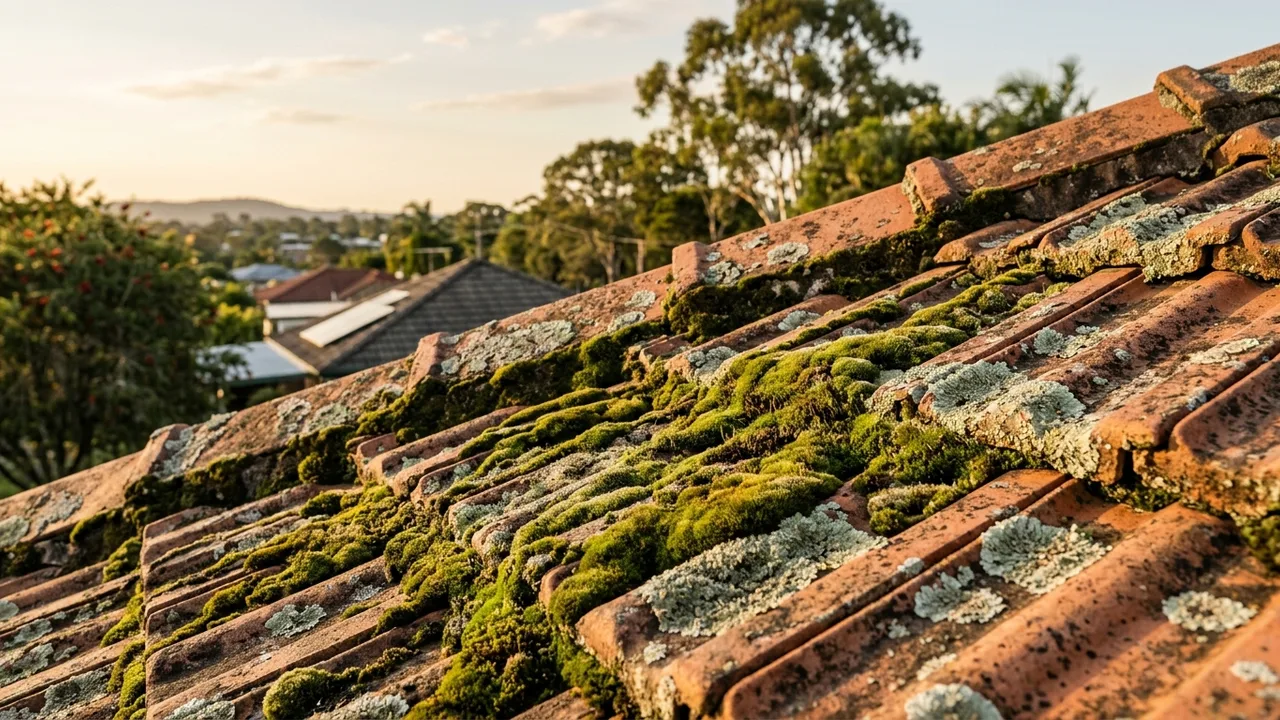
Moss is a plant. It holds moisture against whatever surface it grows on. On a concrete or terracotta tile roof, that means the tile surface stays damp long after rain has dried elsewhere. Over time, that repeated wet-dry cycle breaks down the surface of the tile. In Brisbane's climate, where you can get heavy summer rain followed by intense sunshine, that cycle is especially harsh.
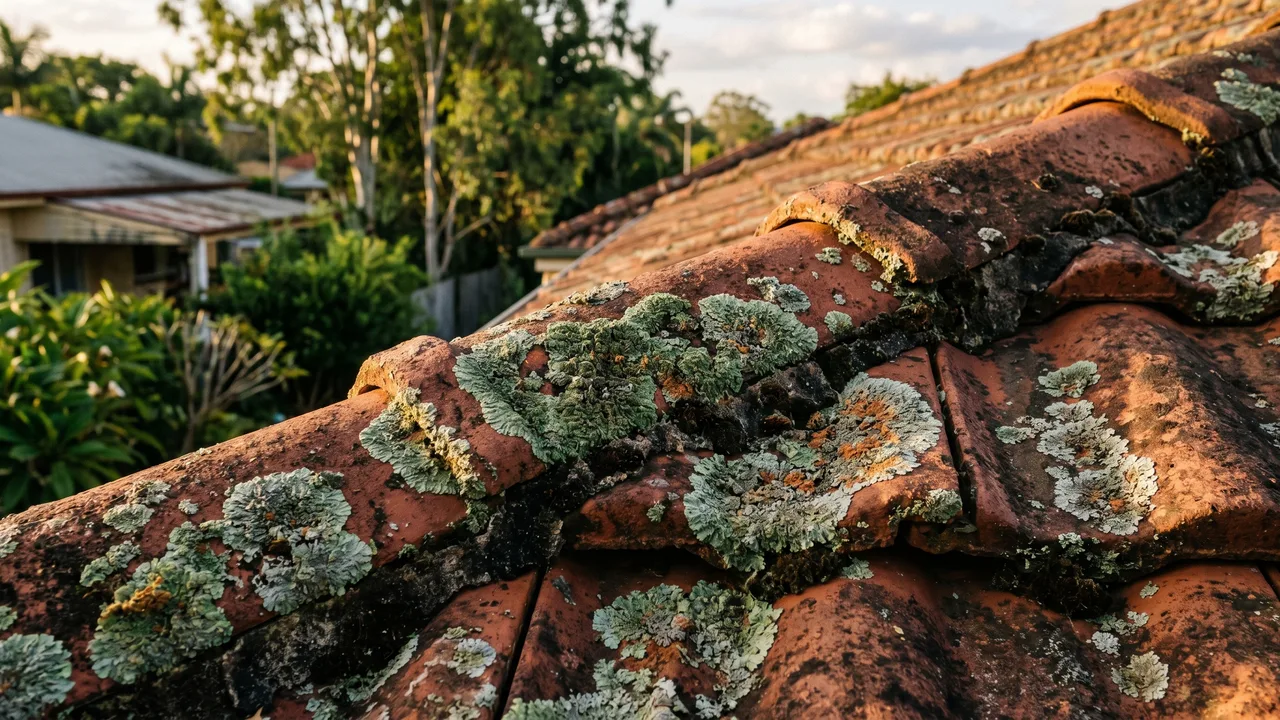
Lichen is a combination of algae and fungi living together. It attaches to the tile surface using root-like structures called rhizines, which physically penetrate the material. On concrete tiles, this can accelerate surface erosion. On terracotta, it can work into the glaze and the clay beneath it. Lichen is harder to remove than moss precisely because it's anchored, not just sitting on top.
Neither will eat through a tile overnight. But the compounding effect over five to ten years is real. You end up with tiles that are porous, brittle and prone to cracking under foot traffic or impact. Once tiles start breaking, water gets in, and then you're dealing with a much bigger problem than some green patches.
Why Brisbane's Bayside Suburbs See So Much of It
If you're in Wynnum, Manly or Lota, you've probably noticed your neighbours' roofs are greener than roofs further inland. There are a few reasons for that.
The combination of coastal humidity, sea air and the shade from mature street trees creates near-ideal conditions for lichen and moss. The suburb of Manly in particular has a lot of older homes with significant tree canopy overhead. Trees do two things that make roof growth worse: they shade the roof (limiting the UV exposure that naturally inhibits growth) and they shed organic debris (bark, leaves, pollen) that gives moss a nutrient base to establish on.
Wynnum and the surrounding bayside area also cop more salt-laden air than suburbs twenty kilometres inland. Salt doesn't directly cause lichen growth, but it can accelerate the breakdown of roof coatings, which leaves the tile surface more porous and therefore more hospitable to biological growth.
Homes in Hemmant and Wynnum West, being slightly further from the waterfront and in some cases more exposed to wind, typically see a bit less growth than the bayside streets, but they're not immune, especially on the south-facing slopes of a roof that don't dry out quickly.
How to Tell If You Have a Problem Worth Acting On
A little green discolouration is not an emergency. Here's a rough way to think about the severity:
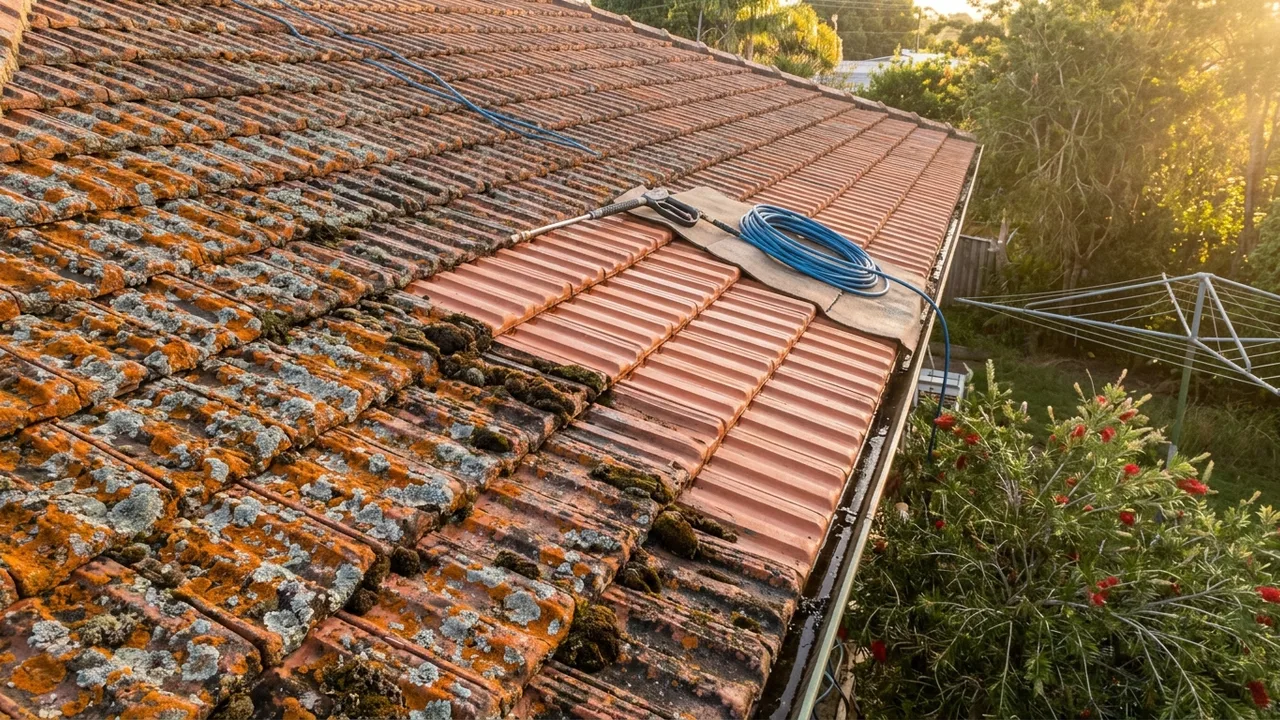
- Light surface algae or early moss patches on an otherwise intact roof with good coatings. Low urgency. A pressure clean and re-seal in the next year or two is reasonable.
- Established moss coverage across a significant portion of the roof, or lichen that has visibly lifted or cracked tiles. Moderate urgency. Worth getting a proper assessment.
- Thick lichen colonies combined with cracked tiles, crumbling mortar on ridge caps, or visible rust on metal roofing. Higher urgency. This is where water ingress becomes a real risk.
You can often see the early stages from the ground with a good pair of binoculars. Getting on the roof yourself is not advisable unless you have experience and the right safety equipment. Tile roofs in particular are deceptively slippery when they have any biological growth on them.
Your Practical Options: DIY, Products or Professional Work
There are a few paths you can take, each with genuine trade-offs.
DIY moss and lichen treatments are available from hardware stores. Sodium hypochlorite-based solutions and dedicated roof moss killers can knock back growth without the need for pressure cleaning. They work by killing the organism, which then gradually weathers off. The advantages are low cost and no need to get on the roof (you can apply some products from a garden sprayer at ground level). The disadvantages are that they're slow, they work best on early-stage growth and they do nothing to address the underlying tile condition or any physical damage. They also need re-application, typically annually.
Pressure cleaning is the fastest and most thorough way to remove established lichen and moss. A professional clean gets the roof back to near-bare tile, which then lets you assess what you're actually working with underneath. The trade-off is that pressure cleaning a heavily grown roof reveals every crack, every area of porous tile and every crumbling ridge cap that the growth was sitting on. That's actually useful information, but it can mean additional repair costs you hadn't anticipated. It's also worth noting that pressure cleaning without then sealing the tile leaves you with a clean but vulnerable surface, one that's actually slightly more porous than before. Cleaning and sealing together make the most sense as a package.
Full roof restoration combines cleaning, repairs to tiles and ridge capping, and a protective recoat. For a roof that has significant growth, ageing tiles and mortar that's crumbling around the ridge caps (which is common on Brisbane homes that are fifteen to thirty years old), a full restoration is often the most cost-effective path over a ten-year horizon. You're not just removing the moss; you're addressing everything that made the moss a problem in the first place.
Typical restoration costs in the Wynnum and Manly area run from around $3,000 for a smaller straightforward job up to $12,000 or more for a large home with significant tile and flashing repairs included. That's a wide range, and the right number depends on your roof size, pitch, tile type and current condition.
Should You Treat It Now or Wait?
This is the question most people are actually asking. The honest answer depends on two things: the current state of your tiles and your timeline.
If your tiles are fundamentally sound and the growth is light to moderate, a clean and seal now prevents the problem from getting worse. You might spend $800 to $1,500 on that and add years to the life of the roof before a full restoration is needed.
If your tiles are already showing signs of porosity, cracking or loss of surface material, and the ridge cap mortar is crumbling, waiting is how a $5,000 job becomes a $9,000 job. Water finds cracks. Once it gets into the roof structure, you're dealing with timber damage, potential ceiling damage and a more complex repair.
The one situation where waiting makes sense is if you're planning a full restoration in the next six to twelve months anyway. There's no point in a standalone pressure clean if a full restoration is already scheduled.
A Sensible Next Step
You don't need to make any decisions based on what the roof looks like from the ground. If you're genuinely unsure about the severity of what you're dealing with, a proper visual inspection is the starting point. A qualified roofer can walk the roof safely and give you an honest read on whether you're dealing with a cosmetic issue or something that needs attention now.
If you'd like to be connected with a local provider who works in the Wynnum, Manly and broader bayside area, that's what we're here for. We refer to roofers who've been vetted for the type of work described here. No obligation, no hard sell on our end.
Quick answers