Roof Restoration guide
What Actually Drives the Cost of a Roof Restoration in Brisbane?
What Actually Drives the Cost of a Roof Restoration in Brisbane?
The honest short answer: roof size, roof condition, and the materials involved do most of the heavy lifting. Everything else, including your suburb, the pitch of your roof, and how long it has been since anyone went up there, adds to or subtracts from that base figure in predictable ways. Understanding those levers before you get a quote puts you in a much better position to judge whether a price is fair.
Roof Size and Pitch: The Starting Point
Contractors price restoration work in one of two ways, either a flat rate per square metre of roof area, or a whole-job estimate after an inspection. Either way, size is the dominant variable.
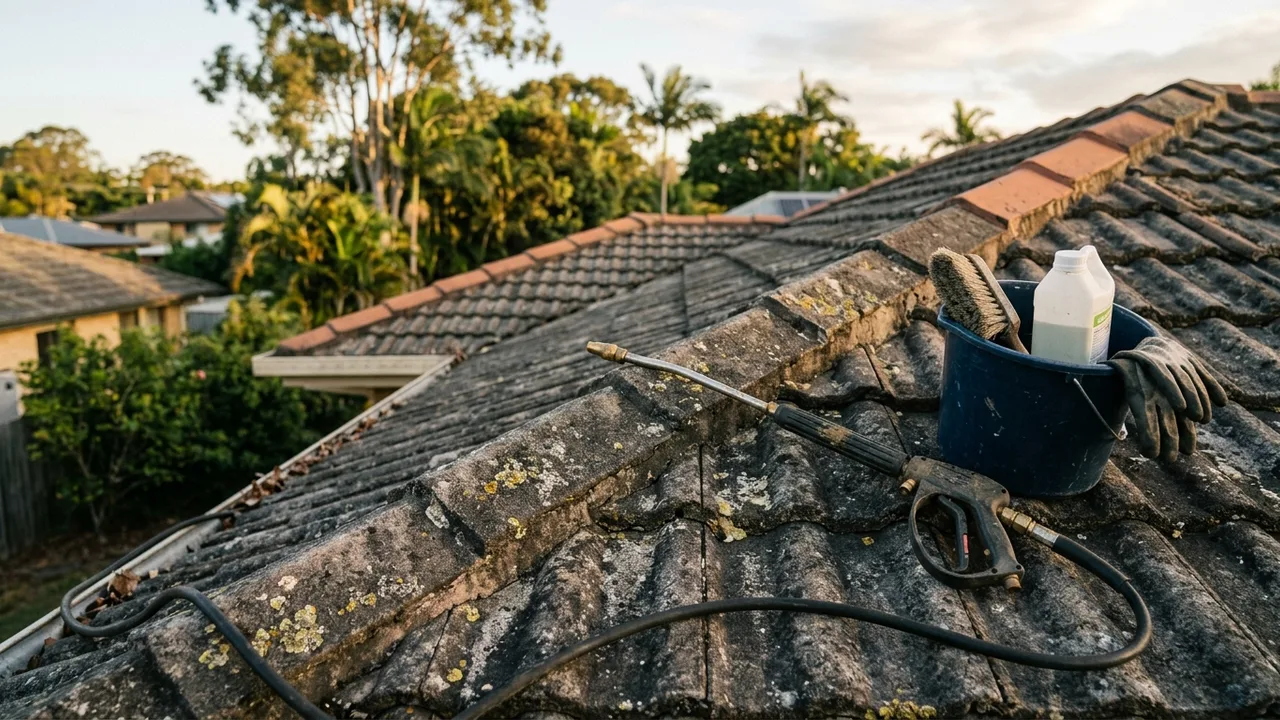
A typical single-storey Queenslander or lowset brick home in the Wynnum area sits somewhere between 150 and 220 square metres of roof surface. A two-storey home, or one with a complex hip-and-valley configuration, can push past 300 square metres. More surface means more time pressure washing, more product used in sealing or recoating, and more hours for any tile or pointing work.
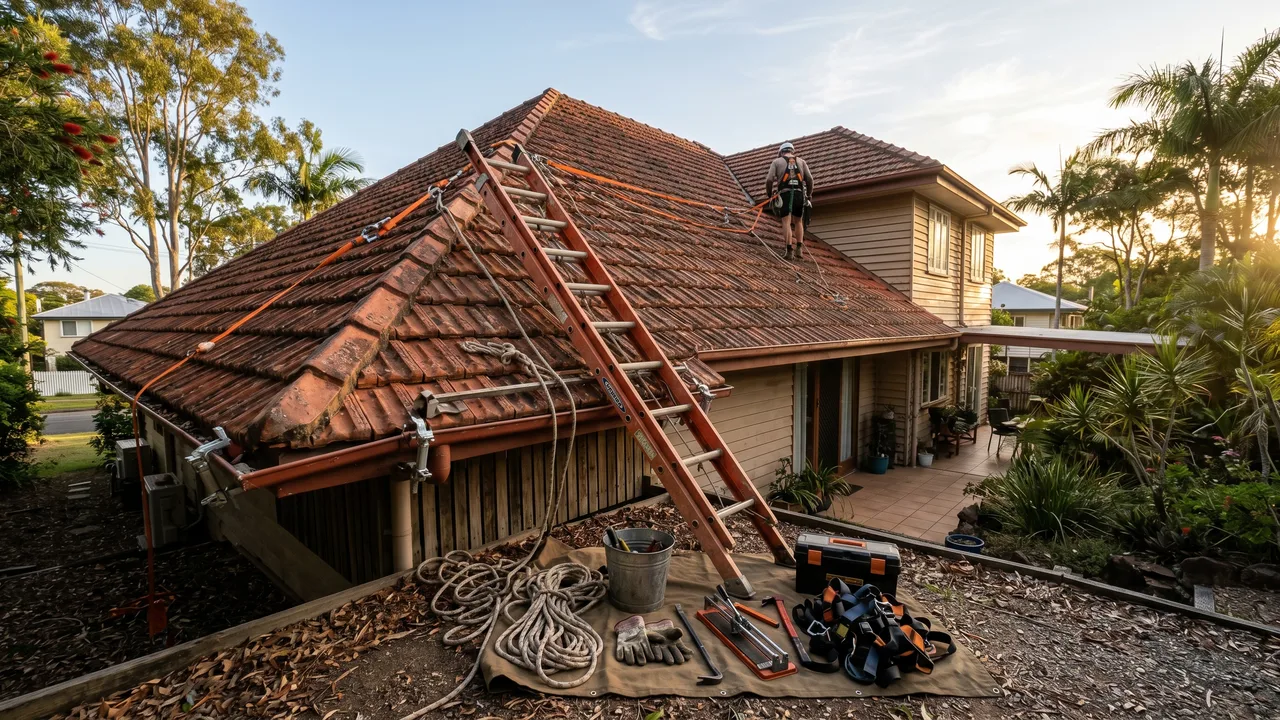
Pitch matters too. A steeply pitched roof (anything above roughly 25 degrees) requires harness and anchor systems under Queensland's Work Health and Safety rules. That extra safety setup adds to labour time. It is not padding, it is genuine cost. Flat or near-flat metal roofs, common on some Hemmant and Wynnum West homes built in the 1970s, are faster to work across but can have their own complications with ponding water and membrane compatibility.
As a rough guide, full roof restorations in Brisbane tend to fall between $3,000 and $12,000. Smaller, single-storey homes with a tile roof in reasonable condition sit toward the lower end. Large, steep, or seriously deteriorated roofs sit toward the upper end.
Roof Material: Tile vs Metal, and What Each Needs
The two most common roof types in suburban Brisbane are concrete and terracotta tiles, and corrugated steel or Colorbond metal. Each follows a different restoration path, and those paths carry different costs.
Tile roofs typically need:
- Pressure cleaning to strip lichen, moss, and dirt
- Individual inspection and replacement of cracked or broken tiles
- Re-bedding and re-pointing of ridge caps (the mortar and flexible pointing compound that seal the highest edges of the roof)
- A sealer or membrane coat across the whole surface
Ridge cap work alone (re-bedding and re-pointing) is one of the more labour-intensive parts of a tile roof restoration. In Bayside suburbs like Manly and Lota, salt air accelerates the breakdown of old mortar pointing, so this work tends to come up sooner than it would for homes further inland.
Metal roofs typically need:
- Rust treatment on any corroded areas
- Reseal or replacement of screws and fasteners
- Flashing repairs where roof meets walls, valleys, or penetrations
- A primer coat followed by a quality roof membrane or paint system
Metal roof coatings require specific primers that bond to the existing surface. Skipping the primer to save money is a trade-off that rarely ends well, as the topcoat can peel within a few years rather than lasting the expected ten-plus.
Condition: What Happens When Maintenance Is Overdue
A roof that has been cleaned and resealed every eight to ten years will cost meaningfully less to restore than one that has been left for twenty years. That is not a moral judgement, it is just how materials behave.
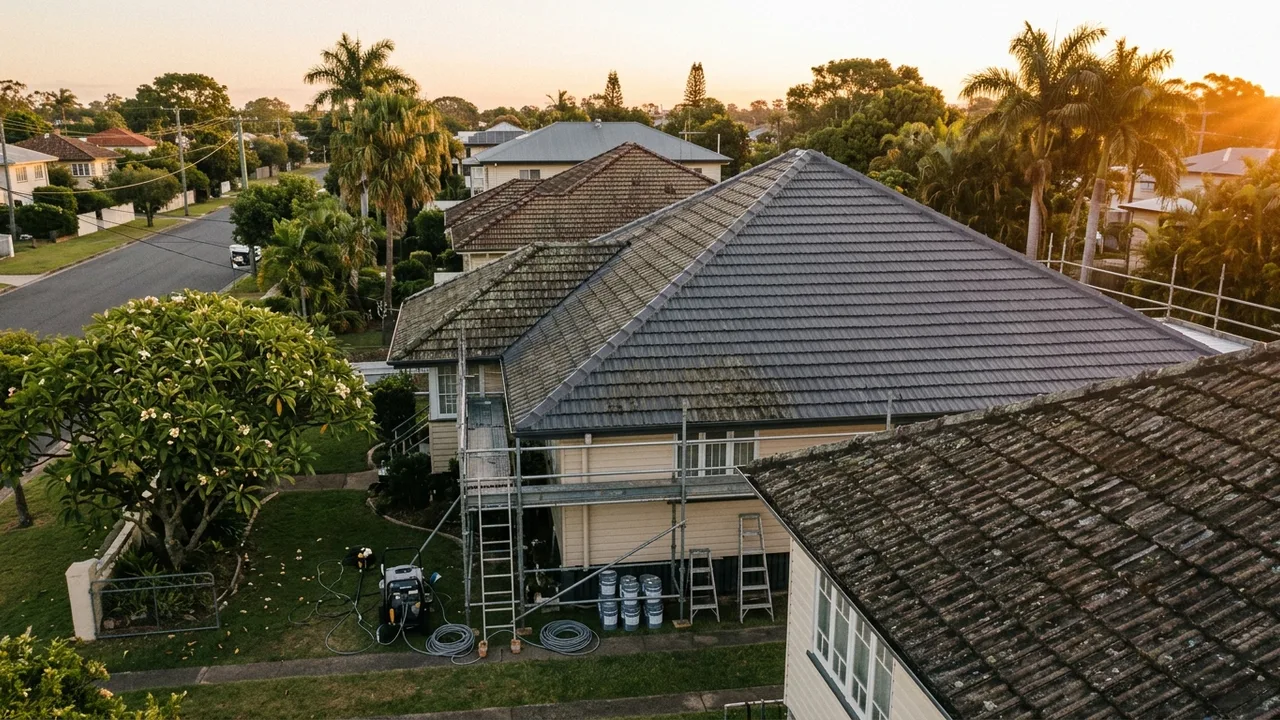
Common signs that a Wynnum-area roof has been left too long include:
- Heavy lichen and black algae growth (the wet, shaded side of roofs facing south or south-east tends to accumulate this fastest)
- Crumbling or missing mortar on ridge caps
- Flashing that has lifted or lost its seal at the junction with walls
- Gutter sections that are sagging, rusting, or detached from the fascia
- Visible cracked or slipped tiles
Each of these issues adds labour and materials to a quote. A roof with thirty broken tiles costs more to restore than one with three. A roof where the ridge caps need complete re-bedding (not just re-pointing) adds extra time because old mortar has to be chipped away cleanly before new bedding can be applied.
This is where some homeowners decide to repair only the urgent items rather than doing a full restoration. That can be a sensible call if the roof is structurally sound and the budget is tight. The honest trade-off is that a partial repair rarely gets the same warranty that a full restoration package does, and it may mean paying for mobilisation costs twice within a few years.
Product Quality and What You Are Actually Buying
Not all roof sealers and coating systems are equal. There is a genuine cost difference between a cheap, thin sealer applied in one coat and a quality acrylic or elastomeric membrane applied at the correct spread rate over two coats. The price gap can be $500 to $1,500 on a mid-sized roof.
What does the more expensive system actually buy you? Typically, a longer effective lifespan (ten to fifteen years versus four to six), better UV resistance in Brisbane's subtropical sun, and a product that can bridge hairline cracks rather than sitting on top of them. For terracotta tiles especially, which are porous by nature, a proper penetrating primer before the topcoat makes a measurable difference in how well the coating holds.
Ask any contractor you are considering: what brand and product are they using, what is the spread rate per litre, and how many coats are included? A quote that omits this information is worth clarifying before you accept it.
Access, Location, and Local Factors Around Wynnum
A few location-specific things affect cost more than people expect.
Salt air exposure. Homes in Wynnum, Manly, and Lota sit within a few kilometres of Moreton Bay. Salt-laden air is harder on both metal fixings and mortar pointing than the air further inland at, say, Manly West or Wynnum West. This does not dramatically change the cost of a restoration, but it does affect how often one is needed and which sealant systems hold up better long-term.
Tree coverage. Homes with large Poinciana, fig, or jacaranda trees overhead tend to accumulate organic debris faster. Organic matter sitting in valleys and gutters accelerates lichen growth and keeps tiles damp, which speeds up mortar deterioration. More debris usually means a heavier pressure-cleaning stage, which adds time.
Access and scaffolding. A roof that can be safely accessed from a standard extension ladder costs less than one requiring scaffolding or a specific elevated work platform. Some older Queenslander homes with high-set configurations need scaffolding, particularly if the fascia or gutters need replacing at the same time.
Gutter and fascia work. If you are already paying for a restoration, adding a gutter replacement or fascia repair at the same visit is often cheaper than having two separate call-outs. Contractors are already set up and on-site. This is worth asking about as a bundled option if your gutters are showing their age.
How to Use This Information When Getting Quotes
Getting two or three quotes is worth the effort for any job over a few thousand dollars. When you compare them, try to compare line by line rather than just looking at the bottom number.
Check that each quote specifies:
- The scope of pressure cleaning (included or charged separately?)
- How many ridge caps need re-bedding versus re-pointing only
- The number of cracked or broken tiles in the count
- The coating product, spread rate, and number of coats
- Any exclusions (flashing repairs, gutter work, fascia) that might come up as variations
A lower quote that excludes several of these items can easily end up costing more than a higher quote that covers everything. That is not automatically dishonest, it may just reflect a different scoping approach, but it means you need to ask the question.
Roof restoration is not a glamorous spend. But a roof that is cleaned, repaired, and properly sealed protects everything underneath it. Approached with the right information, it is a straightforward decision rather than a stressful one.
If you want to talk through what a job on your specific roof might involve before committing to anything, that is exactly the kind of conversation worth having with a local provider who can look at it in person.
Quick answers